
Epilepsy is a chronic non-communicable disease of the brain that affects around 50 million people worldwide. The condition is characterized by recurrent seizures which is transient episodes of abnormal, excessive, or synchronous neuronal activity in the brain. Clinically, these seizures manifest as brief, involuntary motor movements that may be either focal (limited to one part of the body) or generalized (involving the entire body). In some cases, the seizure may also be accompanied by impairment or loss of consciousness, as well as loss of voluntary control over bowel and bladder function.
In Malawi, about 500,000 people live with epilepsy, but only 60 to 70 percent of the population is aware of the condition despite it being treatable. In Neno District, the response to epilepsy has been intensified as a result of the efforts made by Partners In Health (PIH) Malawi in collaboration with the Ministry of Health (MoH). Through the combined efforts, the organization is working on raising awareness, early identification, treatment and management of the condition.
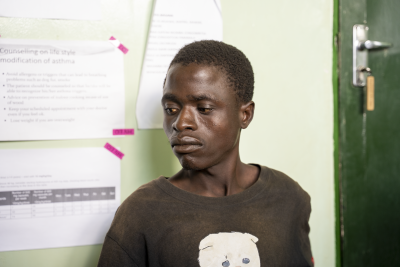
Timothy John at the Neno District Health Office. After struggling with frequent seizures and related complications throughout his youth, Timothy now benefits from consistent treatment and family support, allowing him to live with fewer disruptions and renewed hope.
Madock Masina
The Story of Timothy John
Born on 24 January 2000, Timothy John grew up like many other young people in his community, full of ambition and hope for the future. From an early age, he dreamed of becoming a driver. He imagined completing his education, earning his license, and one day supporting his family through steady work behind the wheel. But as Timothy grew older, a persistent and unpredictable health condition began to disrupt those plans. Timothy lives with epilepsy, a neurological condition that causes recurrent seizures.
During his school years, the seizures became increasingly frequent and difficult to control. Episodes would sometimes occur without warning, interrupting his studies and daily activities. As the condition worsened, attending school regularly became nearly impossible. Eventually, Timothy was forced to drop out, putting his dream of becoming a driver on hold. For his father, Livisoni John, those years were filled with worry and uncertainty.
He remembers how seizures often led to urgent trips to the hospital. Sometimes Timothy would be admitted for days at a time as doctors worked to stabilize him. Much of the family’s time and resources were spent seeking medical care and trying to understand how to manage the condition. The unpredictability of the seizures made everyday life difficult not only for Timothy, but for the entire family.
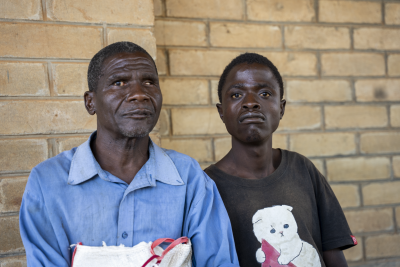
Timothy John (right) with his father, Livisoni John (left). Once plagued by unpredictable seizures that forced him to drop out of school and pause his dream of becoming a driver, Timothy now experiences stability through ongoing care, medication, and family support from Partners In Health Malawi.
Madock Masina
“There were many times when we had to rush him to the hospital,” Livisoni John recalls. “We were always worried about when the next seizure would happen.” Frequent hospital visits and the lack of consistent long-term management meant that Timothy’s condition remained unstable for years. Like many people living with epilepsy in rural areas, access to specialized care and regular medication was limited.
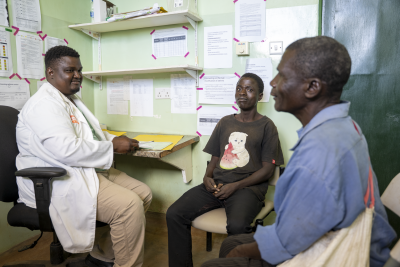
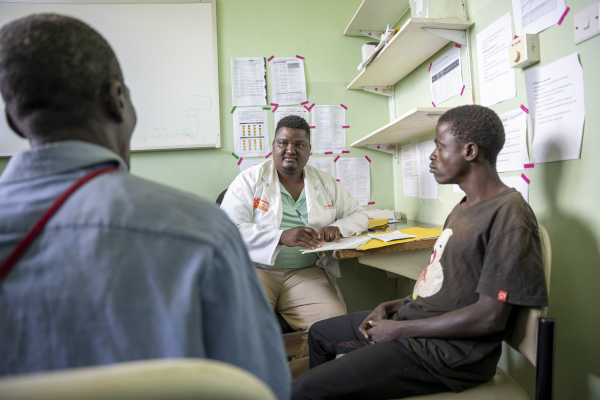
A PIH-supported Mental Health Clinical Officer, Bonface Nampota consults with Timothy John (center) and his father, Livisoni John. Through comprehensive care including antiepileptic medication, psychoeducation, and social support, Timothy has moved from frequent, uncontrolled seizures to greater stability and hope for the future
Madock Masina
PIH’s Intervention
Their situation began to change when the family encountered a Mental Health Clinician from Partners In Health (PIH) Malawi, Bonface Nampota. According to Nampota, at first contact, Timothy had frequent, poorly controlled generalized seizures (multiple times per month, often without warning), with postictal confusion, occasional injuries, and significant daily functional disruption. He had also developed psychotic symptoms including disorganized behavior, agitation, and perceptual disturbances, likely secondary to uncontrolled epilepsy, a known but under-recognized complication in chronic cases.
“We conducted a comprehensive clinical assessment which included seizure history, medication adherence review, and mental health comorbidity screening. Timothy was started on a structured antiepileptic regimen, selected based on seizure type, availability, and tolerability, along with appropriate psychotropic medication for psychotic symptoms.
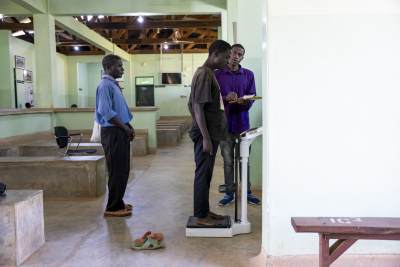
Timothy John stands on the scale during a routine check-up at the Neno District health facility, accompanied by his father, Livisoni John. Consistent monitoring and care through Partners In Health have helped stabilize Timothy’s epilepsy, reducing the frequency of seizures that once disrupted his life
Madock Masina
Additionally, follow-up involved regular clinic visits and active monitoring to ensure adherence, dose adjustments, and early side effect detection. On the other hand, psychoeducation on seizure recognition, medication adherence, and safety was provided to Timothy and his caregivers,” said Nampota.
He added that recognizing the link between health outcomes and social stability, the care plan included social support interventions. Through PIH, Timothy’s household was also enrolled in an emergency cash support program, addressing food insecurity and reducing the caregiving burden on his parents, who had struggled with inconsistent income due to his condition. Over time, Timothy showed significant clinical improvement: seizure frequency and severity markedly decreased, psychotic symptoms resolved, and he became more stable, with fewer emergency visits and better engagement in daily life
For Timothy’s father, the difference is profound. “Before, we were always at the hospital,” he says. “Now Timothy is stable. We know how to manage his condition, and he receives the care he needs.” Although Timothy had to pause his ambition of becoming a driver, his improved health has brought a renewed sense of stability and hope to the family. Being able to live with fewer seizures and fewer hospitalizations has allowed him to participate more fully in daily life and spend more time at home with his loved ones.
Timothy’s journey reflects the importance of accessible and continuous care for people living with epilepsy. Through its partnership with the Ministry of Health (MoH), PIH Malawi is working to close the epilepsy treatment gap in districts such as Neno. The program focuses on expanding access to diagnosis, treatment, and long-term follow-up, while also reducing stigma and complications associated with the condition.
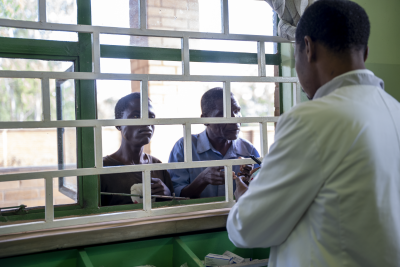
Timothy John and his father, Livisoni John, speak with a healthcare worker at the clinic window and receive medication.
Madock Masina
Mental Health Initiatives in Neno
Currently, Neno has 869 epileptic clients in active care, and about 613 other mental health clients with different conditions in care. According to the NCD Coordinator for Neno District, Bellings Mzungu, the Ministry of Health is working to increase community awareness to enable early recognition of epilepsy signs and symptoms and prompt care-seeking at nearby facilities.
“Beyond community awareness, we are also promoting prevention of epilepsy risk factors such as wearing crash helmets on motorcycles, avoiding alcohol, and refraining from eating uninspected pork not certified by health personnel,” said Mzungu.
He added that the district also has thousands of patients enrolled in chronic care clinics (IC3), with epilepsy forming a substantial proportion of the caseload due to its high burden in rural communities. The current response integrates mental health into primary care, improves availability of essential psychotropic and antiepileptic medications, strengthens follow-up systems (including appointment tracking and community-based support), builds capacity of non‑specialist healthcare workers, and engages communities to reduce stigma and improve health‑seeking behavior.
Way Forward
The district is also working on further decentralization, early detection, supply chain strengthening, psychosocial support, better data systems, and integration with other NCD programs. These interventions will be combined with community awareness to promote early care-seeking, while health promotion targets key risk factors: crash helmet use, avoiding alcohol and smoking, healthy diets and facility-based deliveries to prevent birth-related brain injuries.
On the other hand, PIH’s mental health program in Neno integrates epilepsy care within primary healthcare through decentralized services, task‑shifting to train general clinicians and nurses, routine screening, medication and adherence support (including psychotropic procurement), transport for staff to reach remote areas, community outreach with home visits, psychosocial and economic support addressing social determinants, and anti‑stigma campaigns. This integrated model ensures holistic, continuous, person‑centered care for patients like Timothy.