Beatrice Kumpondo, 39 years old, is a mother of five children from Masake 1 Village, Village Head Chaonda within Traditional Authority Mlauli in Neno, Malawi. Her 21-year-old first born daughter, Dorica, is mentally ill whilst her 14-year-old third child, Austin, lives with epilepsy. Unfortunately, her husband is also mentally ill and unable to provide for the family. This makes Beatrice the primary caregiver for her family that includes her seven-month-old son, James, whom she is breastfeeding. Sadly, despite her efforts to provide for her family, Beatrice’s circumstances have worsened significantly.
In the last growing season, Beatrice did everything within her capacity. She cultivated maize on her land, planted vegetables around her home for relishes, and once kept a chicken with hopes of building a small flock. She relied on her expectations of normal rainfall to harvest her maize, but unpredictable weather patterns, from dry spell to heavy rains, ruined her crops. Climate change, for her, is a lived reality. By the end of the season, her efforts yielded nothing. Today she has neither harvest nor livestock, nor sufficient food to produce breast milk for her baby. Baby James weighs only 7.6 kilograms, a sign of malnutrition she recognizes as dangerous, yet she feels helpless to address it alone. This is not a medical mystery; it is a crisis rooted in hunger.
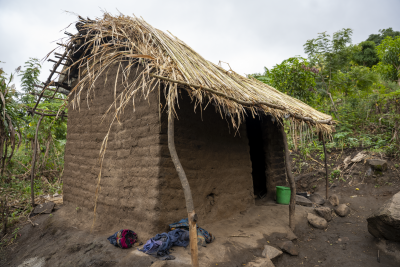
The type of small, leaking kitchen where Beatrice and her five children now live after heavy rains completely destroyed their house in January 2026. This temporary shelter offers little protection or space for the family.
Joseph Mizere
In January, heavy rain further destroyed her household, collapsing her house entirely. Since then, Beatrice and her children have been living in a small kitchen which leaks and only accommodates three of her five children inside at night. Dorica sleeps at her grandmother nearby because there is no room in the kitchen, but she could not mention where the other child sleeps. However, her neighbors confided that the children sleep outside the kitchen because the husband does not want them inside. Despite her pleas for reconstructing their house from anyone within her power, no assistance has come since the house collapsed. Her living conditions are a safety and dignity crisis.
As a bread winner, Beatrice is expected to look for piecework or do casual labor to feed the family, but this is barely possible as she is also a caregiver to the three people living with non-communicable diseases (NCDs) in her family, including taking care of her baby and the 5-year-old Estele. “All of them need serious attention because of their conditions,” she said. This forces them to go for days without a meal. Her 16-year-old second child, Geniyo, who dropped out of school when she was only in grade 2 and was supporting her at times, went to live with her uncle after the house collapsed. Her sister and a few neighbors occasionally share a cup of flour for porridge, but it is never enough. With no solid extended family support, her only 2 brothers are married and settled elsewhere, and her father just passed away in March 2026, Beatrice faces each day alone in her efforts to keep her family alive.
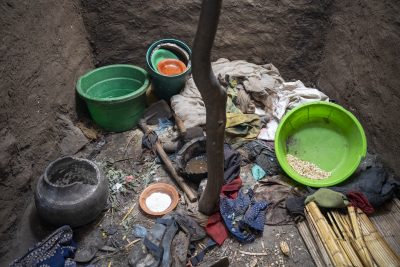
Inside Beatrice’s current living space is a cramped, leaking kitchen with basic household items. After the collapse of their house, the family struggles with dignity, safety, and overcrowding in these harsh conditions.
Joseph Mizere
For 4 months from January 2026, Beatrice has been one of the 3,000 beneficiaries of food aid from Partners In Health (PIH) Malawi, which has prevented her family from starving. A package consisted of 50kg of maize, 3kg of beans, 1kg of salt, 1 liter of cooking oil, and 15,000 Malawi kwacha for milling costs every month. PIH Malawi’s efforts followed the State President’s declaration of a state of disaster in 11 of the country’s 28 districts due to the worsening food crisis after a report that Malawi Vulnerability Assessment Committee (MVAC) issued in October 2025. PIH complemented the government’s response in Neno which was based on MVAC data, targeting 15,890 of the 19,017 food-insecure households in the district.
Nonetheless, now the food aid has ended. Beatrice is back to zero. She is unsure of where to get the next meal, a challenge she has to think about every single day. “The food helped us to stay out of hunger even though it was never enough to take us throughout the month due to the size of my family. Now, I am hopeless. I don’t know what will happen as the food distribution has stopped,” she says. To Beatrice, the end of this aid is more than an inconvenience; it is a threat to her family’s survival.
Beatrice has a heartfelt message to those who can still assist; “Please help us. Keep us out of hunger. Without you, I don’t know where we will be. My children need you. My baby needs proper nutrition. I need support for my own health. Don’t leave us behind.” These are not demands but desperate appeals from a woman who has exhausted her options. She also pleaded with the government to ensure consistent supply of epilepsy medication so that his son, Austin, can easily access them at Ligowe Health Centre.
Despite her hardships, Beatrice is not asking for charity forever. She envisions a way to support herself and her children. Her immediate needs include emergency food supplies to sustain her family as she begins rebuilding. She dreams of starting a small business, selling fish, for example. With a modest capital, she could purchase fish from local markets and sell them within her community. It is only a matter of a starting point.
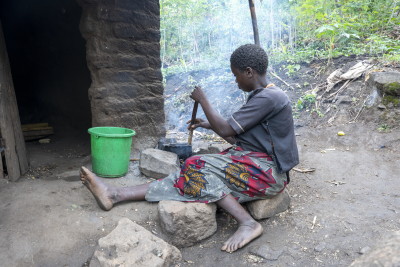
Beatrice is preparing food using traditional methods. Like Beatrice, many people in the area shoulder heavy responsibilities due to poverty and the ongoing food crisis.
Beatrice’s life is a complex web of crises, all interconnected. Climate change brought heavy rains that destroyed her house and ruined her crops. Food insecurity has led to malnutrition in her baby and her own weakened health. The NCDs in her household keep her trapped as the sole caregiver, preventing her from earning income. Her collapsed home has left the family exposed to harsh weather conditions, increasing their vulnerability to health issues and accidents, but also emotional distress. It also leaves them with a financial burden of rebuilding the home from already limited resources, potentially plunging the family further into poverty.
Addressing Beatrice’s situation requires a comprehensive approach, improving her food supply, providing income opportunities, and securing safe housing. She is ready to work, rebuild, and support her family. She only needs partners willing to help her take that first step.
According to the PIH Malawi Executive Director, Basimenye Nhlema, the organizations understands that Beatrice is not alone in this situation, rather many other households in the district are facing a similar challenge even after the lean period has just ended. “For many community members in Neno District, the hunger crisis is not due to laziness, rather it is because of climate related challenges which have affected the district consecutively in the past 3 to 4 years. They have been subjected to little or no harvest continuously, including in the just ended farming season,” she explained.
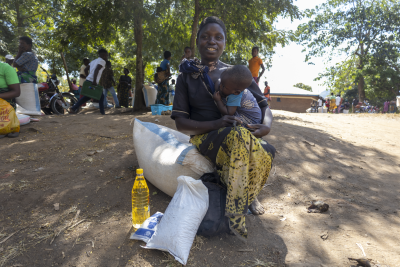
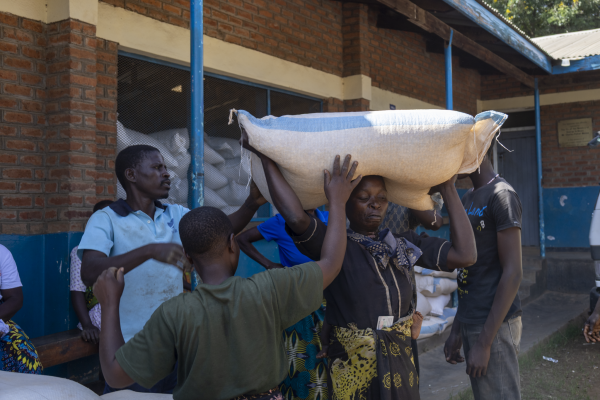
Beatrice Kumpondo, 39-year-old mother of five, receives a package consisting of 50 kg of maize, 3 kg of beans, 1 kg of salt, 1 liter of cooking oil, and 15,000 Malawi kwacha for milling costs every month.
Angella Semu
Nhlema clarified that the conclusion of the food distribution exercise does not mean the crisis has ended, but this is due to limited financial resources. “We will continue to mobilize resources, and we will come back to support the government in its effort when we find them,” she said.
Speaking during the last PIH Malawi’s food distribution exercise that took place on 14 May 2026, the Neno District Council Disaster Risk Management Officer, Amoss Chandilanga, praised PIH for going beyond its core mandate of providing health care. “By distributing food, they have reduced absenteeism in schools, minimized malnutrition challenges, but also prevented more deaths from hunger as other people resorted to eating harmful food substances. This is commendable,” he said. Chandilanga was speaking from an incidence where one child died and 2 others from the same family survived after being admitted in the HDU at Neno District Hospital for days following eating nsima from poisonous cassava flour.
As we commemorate Nutrition Day today under the theme; “Shaping the Future of Joint Nutrition Action in a Changing World”, we are reminded that this is not an abstract call to action but a matter of survival for people like Beatrice. This requires all stakeholders to join hands in making strategies and policies that will govern even vulnerable community members to stand on their feet and become socially independent to foster their resilience, enhance their mental well-being, and promote their sense of dignity and self-worth. Ultimately, this will help them contribute positively to their communities, lead fulfilling and autonomous lives, but also support the development of healthy and balanced communities.
PIH Malawi responds to people’s needs beyond disease treatment based on the premise that medicine and medical interventions alone are not adequate for resolving complex issues that patients and their households face in settings of poverty. It strives daily to interrupt the cycle of poverty and the burden of diseases by addressing the social inequalities that place vulnerable clients at increased risk of illness in Neno District.