Maternal mortality remains the leading cause of death and disability for reproductive aged women in developing countries. The first month of life is the most vulnerable period for every child’s survival. Studies have shown that children who experienced maternal deaths within 42 days of their birth face a significantly higher risk of dying within the first month compared to babies whose mothers survive (UN IGME Report, 2024).
Over the past years, Malawi has struggled with a high maternal mortality of 439 deaths per 100 000 live births (WHO 2023). Although this continues to improve, most women still die during or within 42 days of their childbirth. Some of the leading causes of these maternal deaths include postpartum hemorrhage, infections, high blood pressure, and obstructed labor.
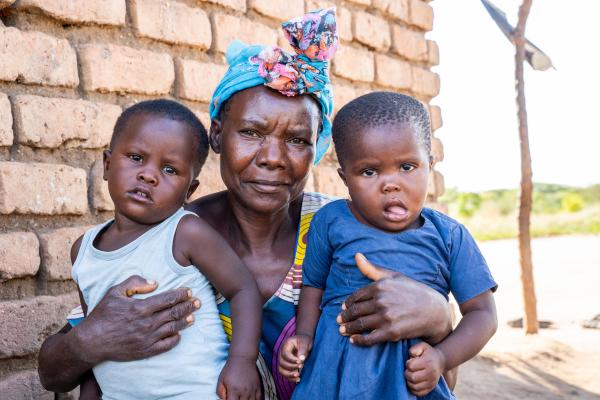
Following these high mortality rates, Partners In Health (PIH) Malawi through its nutrition arm started an intervention in Neno district aiming at supporting victims of maternal deaths in 2008. The organization has been providing infants who lose their mothers after birth with optimal care including nutrition feeding (Lactogen), facilitating timely immunization and guardian counselling sessions on growth monitoring.
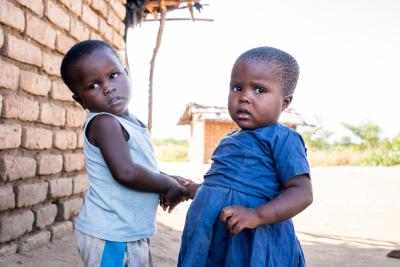
Prince and Princess look toward a brighter future. PIH Malawi’s specialized nutrition feeding program ensures that maternal loss does not dictate the final story for these children.
Joseph King Mizere
The Story of Prince and Princess
Prince and Princess from Chifunga catchment area in Neno district are among the several children that lost their mothers due to maternal death. They are children of a 21-year-old Martha who went to Lisungwi Community Hospital after being referred from Chifunga Health Center due to the increase in blood pressure during the last three months of her pregnancy.
On 15th October, 2023, Martha gave birth to her twin babies before being discharged from the hospital. A month later, Martha started experiencing unusual signs including swollen stomach and difficulties in breathing. She returned to the hospital and was diagnosed with the swelling of her heart and liver. She was immediately given medication to treat the signs and remained in the hospital for some days before being discharged on the 14th of December, 2023.
On 10 January, 2024, Martha lost her life leaving behind her three children, 3 year-old Pachalo, and the two beautiful twins in the care of her aging mother, Chrissy Golombe (55).
“When my daughter passed on, I worried about how I was going to take care of the children that she left behind, particularly the infants. I do piece works to feed my family, but looking at the weather pattern that year, I lost hope in my ability to raise these children. Immediately after she passed on, I started feeding the infants with cow milk as a substitute for the breast milk they could not access from their mother. Unfortunately, the health of the kids started declining but I had no any other option until one day when I visited the hospital for antenatal visit, the help came,” explained Granny Chrissy.
“After some days of reporting the issues at the hospital, PIH Malawi took an initiative to assess the kids using their criteria and I was informed that they will start giving them milk. When they started receiving the milk, their nutrition started improving significantly. Eventually, I stopped visiting the hospital often due to their frequent sickness. This gave me time to concentrate on other household chores and piece works,” explained Chrissy.
Chrissy added that that currently, she has 7 other children in her care from her other children and she has been struggling to feed and clothe them single-handedly. She commended PIH for the timely support rendered to her grandchildren, Prince and Princess.
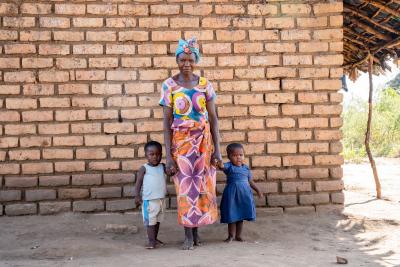
Supported by PIH Malawi, 55-year-old Granny Chrissy Golombe stands resiliently with her grandchildren, twins Prince and Princess, outside their home in Neno district.
Joseph King Mizere
Support rendered to Prince and Princess
According to the PIH’s Reproductive, Maternal Newborn, Child and Adolescent Health Program Manager, Isaac Mphande, the organization immediately intervened to save the lives of the children. “At the time, the two infants were weighing 3.2 kgs at 4 months old but after supporting them with Lactogen, their nutrition improved significantly. At the age of 1, the two were weighing about 8.1 kgs and at 2 years and 5-months-old, Prince weighed 12.9 kgs whilst Princess weighed 12.1 kgs,” said Isaac.
According to Isaac, PIH recruits these infants as early as from days’ old and graduate them when they are two-years-old. “We believe that they can survive on other daily meals only from then on rather than when they are below that age,” he continued.
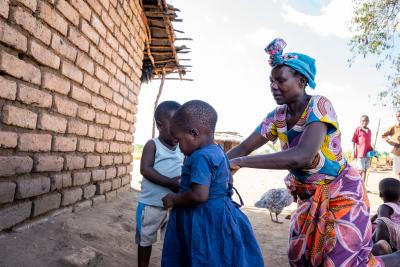
Chrissy Golombe cares for the twins in their backyard. With PIH Malawi managing the children’s nutritional needs, Chrissy has the vital time needed to focus on household chores and support her large family
Joseph King Mizere
Coordination with Neno District Health Office (DHO)
Neno District’s Safe Motherhood Coordinator, Nelson Makuru , disclosed that the maternal mortality ratio (MMR) in Neno District is at approximately 54 deaths per 100,000 live births, reflecting an ongoing battle in maternal health despite improvements over the years in curbing maternal deaths and supporting its victims.
“Support from partners including PIH Malawi has been crucial for the provision of maternal health services in Neno District. It has supported us with infrastructure, equipment, training for midwives and clinicians particularly through the Global Action to Improve Nurse Midwifery & Care (GAIN) initiative, and the Emergency Obstetric and Newborn Care (EmONC). These have significantly enhanced the capacity of our health facilities and overall helped in improving the maternal health outcomes,” said Makuru.
He added that formation of mother groups and increased awareness campaigns such as “Uchembere Wabwino” programs implemented by other stakeholders, but also previous integration of PIH Malawi Community Health Workers (CHWs) in Neno from 2007 to 2024 have also effectively educated families about the importance of antenatal care, skilled birth attendance, and postnatal follow-ups thereby increasing the facility-based deliveries and early antenatal care visits. This has greatly reduced maternal deaths.
Meanwhile, Neno district has improved its performance on maternal health services. While some challenges remain, particularly in strengthening postnatal care follow-ups, the government’s cadre of Health Surveillance Assistants (HSAs) is playing a commendable role in ensuring that maternal health services continue to be fully utilized.
Need for more support
Apart from supporting children who are victims of maternal death, PIH Malawi is also supporting infants whose mothers can’t produce enough breast milk due to various clinical complications ranging from severe adult malnutrition and infections on the breast(s). Currently, the organization is supports 5 pairs of twins, 2 sets of triplets and 12 other children.
However, PIH only supports the infants according to its capacity. There are still more other children that needs either lactogen or Likuni Phala to provide their bodies with the essential nutrients necessary for healthy growth and development as they are the future workforce, leaders, and contributors to economic growth, stability, and overall societal progress. Your support will go a long way in helping those children.